all case studies
what a pair of glasses taught us about worker wellbeing
Vision correction for good business: boosting factory worker productivity through eye health.

impact
6%
increase in worker productivity among glasses recipients
3x
return on every dollar spent for the factory over the 3-month trial period
project partners
VisionSpring, Shahi Exports Pvt. Ltd.

Karnataka, India, Asia Pacific
can a pair of reading glasses costing less than ten dollars meaningfully improve productivity for workers at the peak of their earning lives?
In labour-intensive manufacturing, productivity constraints are often assumed to trace back to skills gaps, incentives, or process inefficiencies. A quieter category goes largely unexamined: basic physical capability. Presbyopia, the age-related loss of near-focus vision that sets in predictably during a person's forties, impairs precisely the close-detail work that garment manufacturing demands, yet it is rarely screened for on the factory floor.
GBL's randomised controlled trial at three of Shahi Exports’ factories in Karnataka put rigorous numbers to this problem for the first time in a factory context. Correcting near vision with free reading glasses improved garment worker productivity by nearly 6% and returned 3x on every dollar invested within three months.
scope
India's garment sector employs 45 million people directly, over 60% of them women, making it the single largest formal employer of women in a country where four in five are not in paid work. Presbyopia affects more than 1.8 billion people globally, yet in low- and middle-income countries, fewer than 1 in 10 people who need glasses have access to them.
Uncorrected presbyopia costs the Indian economy an estimated $14 billion in lost productivity every year. In garment manufacturing, where output is measured and wages are tied to pieces completed, blurred vision means depreciating output, lower earnings, and the physical toll of straining to compensate.
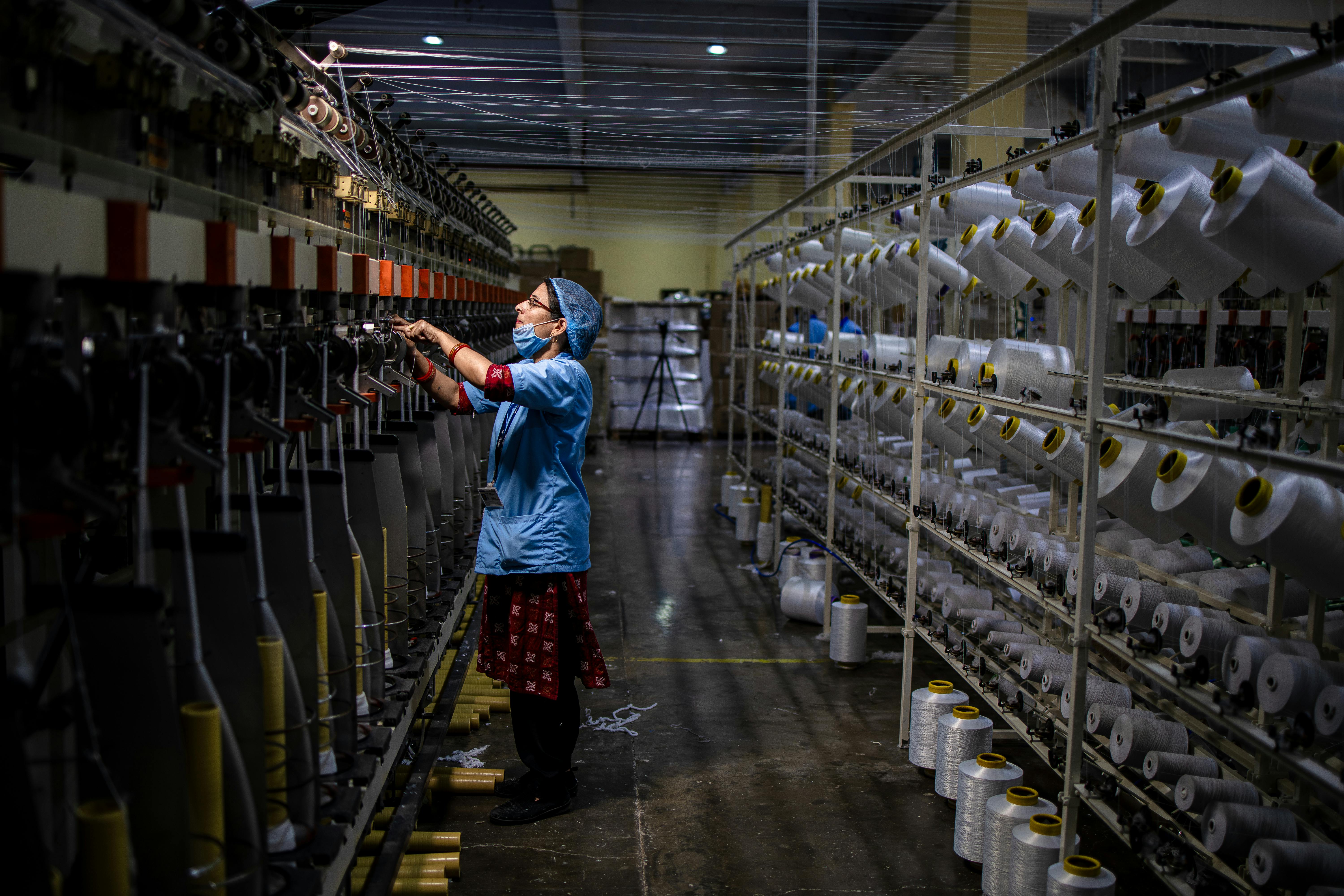
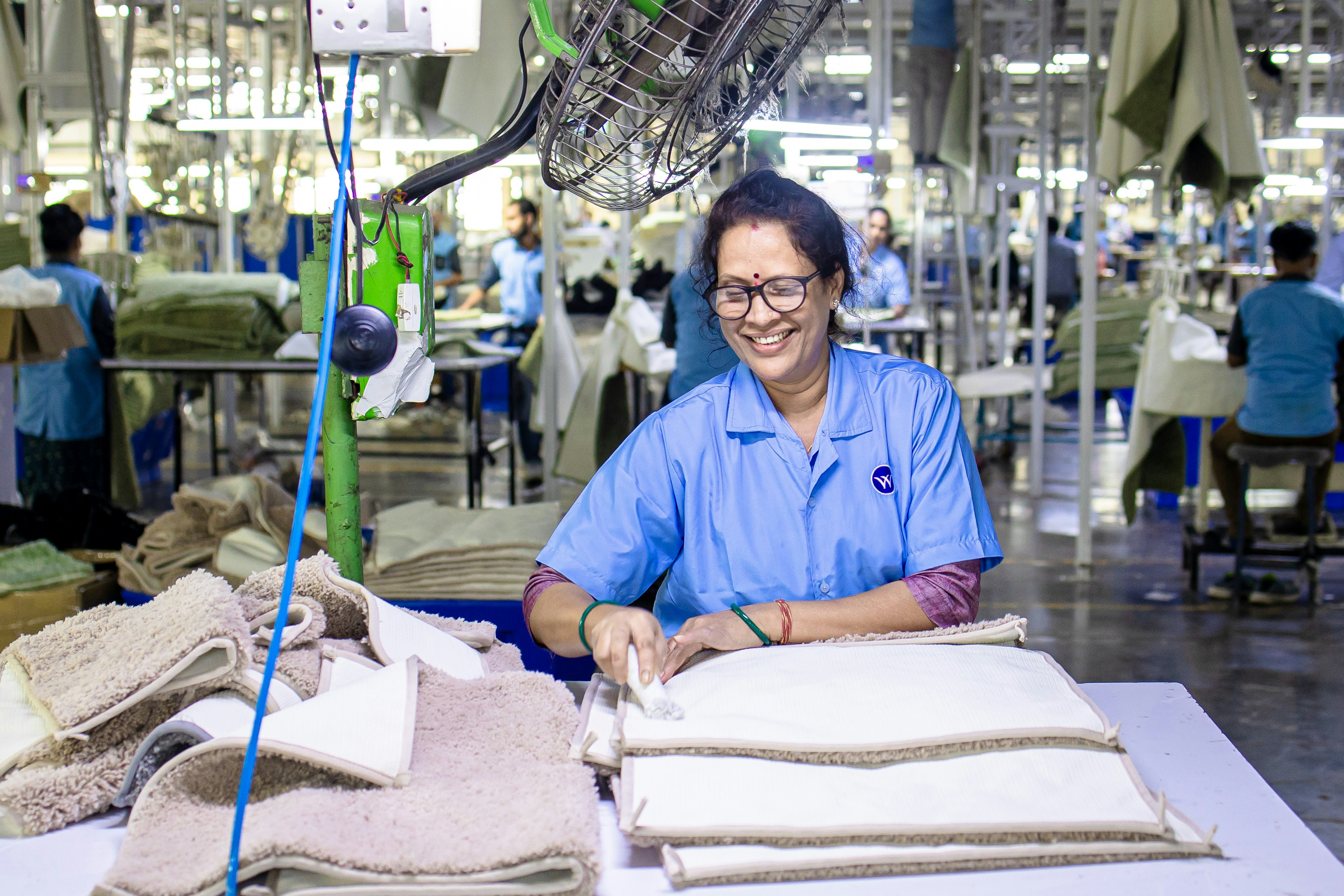
The trial was conducted across three Shahi Exports factories in Maddur, Karnataka, targeting sewing machine operators, 99% of whom were women, 41 being the median age.
approach
PROductivity Study of Presbyopia Elimination in gaRment workers (PROSPER II) was designed and implemented by GBL, VisionSpring, and Shahi Exports, India's largest apparel and textile manufacturer. VisionSpring conducted free eye screening for all participants. Those diagnosed with presbyopia were randomly assigned to receive corrective glasses either immediately or at the end of the study period.
Adherence support was woven into existing factory structures. Line supervisors, called "captains", were each overseeing three to five workers and were trained on presbyopia and common challenges for new glasses wearers. They received small monthly incentive payments ($2–4) tied to adherence rates in their group. This supervisory layer was critical: it closed the gap between access and utilization that most workplace health programmes fail to bridge.
GBL developed a PushButton productivity measurement system: each worker received a handheld tally counter and pressed it each time they completed a unit of work. Enumerators recorded tallies twice daily, enabling precise calculation of individual daily efficiency — pieces completed, weighted by complexity, against total available working time.
methodology
The study was a randomised controlled trial, enrolling 682 workers across three factories between November 2023 and May 2024. Workers were matched by age, tenure, and baseline productivity before being split evenly into two groups. A four-week baseline period preceded the trial, followed by 12 weeks of observation. All 682 participants completed the study. The intervention group consisted of 322 workers who received reading glasses at the onset of the trial period, while the rest received them post the trial period.
The primary measure was daily work efficiency, analysed with controls for age, prescription strength, skill grade, and starting productivity. Secondary outcomes included:
Glasses wear adherence, tracked through daily unannounced checks
Self-reported vision quality, assessed at the start and end of the study
Cost-benefit and return on investment analysis
outcomes
The primary analysis saw nearly 6% productivity increase among glasses recipients compared to the control group. This matches gains seen from management soft skills training programmes in similar factory settings — at roughly one-tenth the cost per person.
Workers who received glasses reported meaningful improvements in how well they could see day-to-day, with self-reported vision scores improving significantly by the end of the study.
Adherence grew steadily throughout the trial, from 41% at week 4 to 65% at week 12 — without any financial incentives to workers. Most workplace wellness programmes achieve participation rates of 20–40%, even with direct worker incentives. This programme exceeded that range without such measures.
On costs and returns:
Total cost of intervention: Within $10 per worker (screening, glasses, and adherence support)
Return on investment: 3x over 3 months
72% of workers said they would pay $6–17 for glasses — against a delivery cost of $11.31, suggesting the potential for self-sustaining cost-recovery models at scale.
6%
productivity gain among glasses recipients
65%
glasses adherence at week 12, without financial incentives to workers
<$10
cost per worker, matching productivity gains seen in management training programmes that cost ten times more
potential
PROPSER II adds to a growing body of evidence, alongside the original PROSPER I study on Indian tea pickers (21.7% productivity gain) and the THRIVE trial in Bangladesh (33% income increase among artisans and shopkeepers), that vision correction is a reliable, scalable lever for improving productivity and earnings across labour-intensive sectors.
The strong ROI suggests factories themselves have a business case to sustain such programmes without external subsidy. Shahi has committed to scaling the program beyond presbyopia to its 100,000 workforce.
The case for investment is also a gender equity argument. The majority of workers in this cohort were women in their forties, at the intersection of peak earning potential and peak presbyopia onset. Correcting near vision enables not just faster stitching but the ability to read a mobile phone, help a child with schoolwork, and manage daily tasks with independence.
The findings support vision correction as a credible, evidence-backed strategy for advancing SDG 1 (poverty alleviation), SDG 3 (good health), SDG 5 (gender equality), and SDG 8 (decent work).