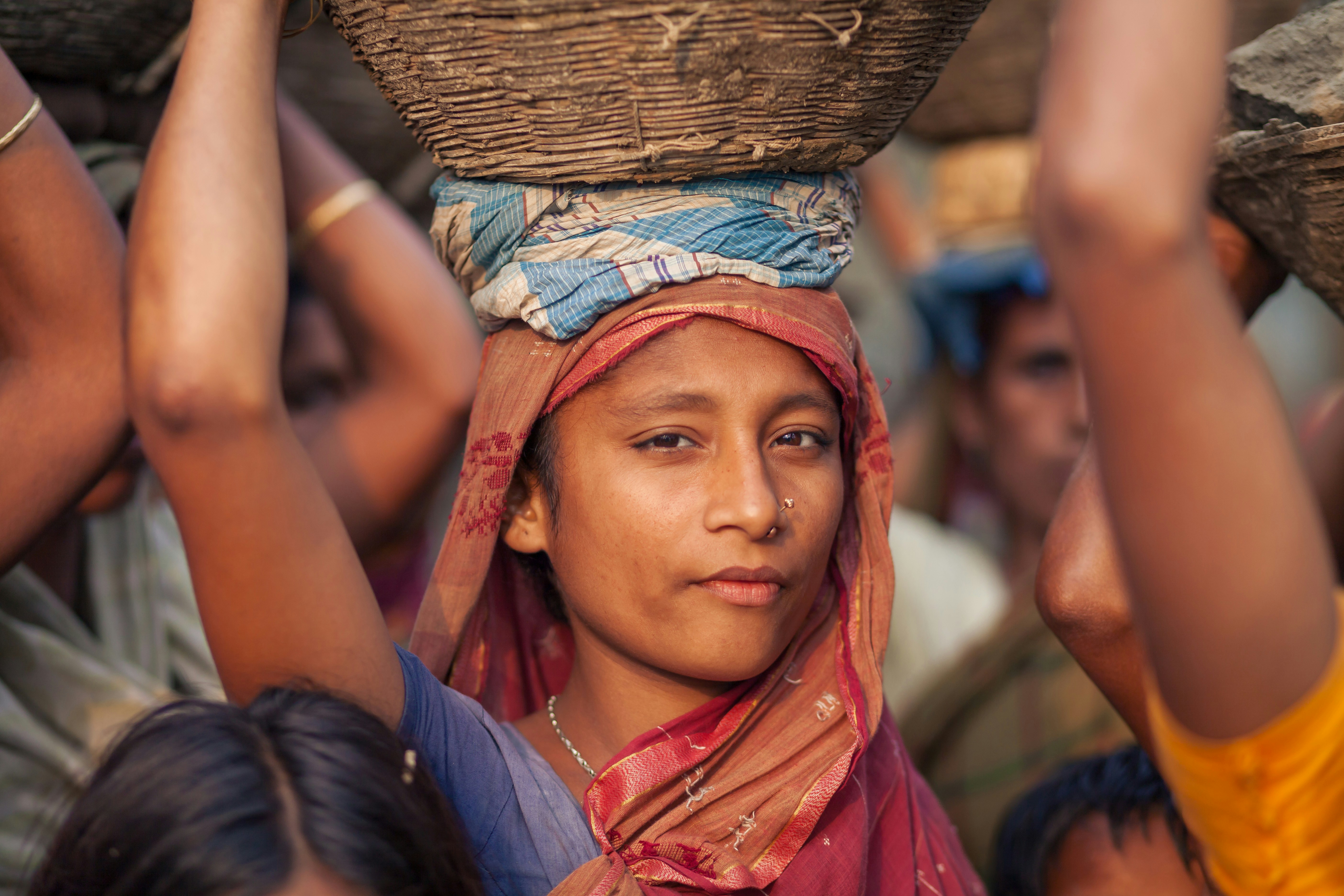
This is the second part of a three-part series examining the Annual Indian Budget 2026-27 through the lenses of health, livelihood, and gender. This section focuses on women’s economic participation.
India's growth ambitions cannot be realised without significantly expanding women's economic participation. . According to the ILO, only around 31% of working-age women in India participate in the labour force, compared to 54% in other major economies. The gender gap stands at nearly 40 percentage points, one of the widest among countries at similar income levels. The recent rise in participation, while real, has been driven largely by rural self-employment in agriculture, much of it unpaid or distress-driven rather than indicative of sustained economic mobility. Over 90% of employed women remain in the informal sector, without social security, maternity protections, or income stability.
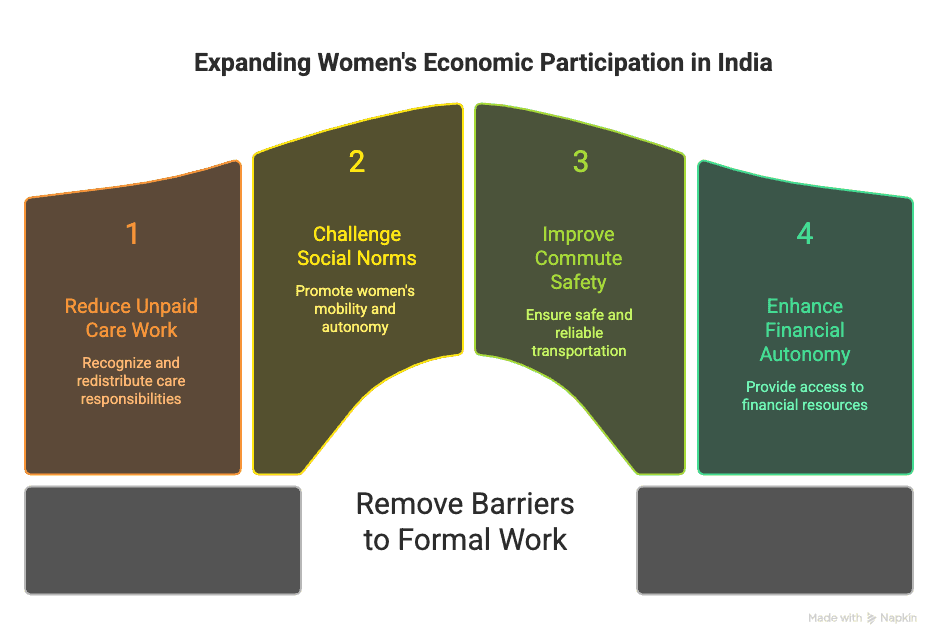
The barriers keeping women out of quality formal work are well documented: unpaid care work that falls disproportionately on women and contributes an estimated 3.1% to GDP without recognition; social norms that restrict mobility; unsafe commutes; and limited financial autonomy. These are structural constraints with measurable economic costs in talent that industries cannot access, in productivity that firms cannot realise, and in growth that the economy cannot sustain. In a global environment marked by supply chain volatility, climate risk, and shifting trade relationships, such underutilization also weakens economic resilience. A workforce concentrated in informal and precarious employment limits the country’s ability to absorb shocks and sustain growth under pressure.
At a time when India is positioning itself as a manufacturing and supply chain alternative, a shallow female labour force limits how quickly industries can scale and adapt.
What the Budget Accounts For
The Budget makes meaningful strides in shifting the framing of women's workforce participation to an economic imperative.
Building on the Lakhpati Didi programme, the Budget introduces Self-Help Entrepreneur (SHE) Marts, community-owned retail outlets designed to help rural women move from basic credit-linked livelihoods toward running actual businesses.
The Sakhi Niwas scheme supports working women's hostels in urban areas, addressing the shortage of safe, affordable housing that keeps many women from taking up city-based employment. One girls' hostel will be established in every district with Higher Education STEM institutions, targeting the gender gap in technical roles at the point where it often forms.
The implementation of the new Labour Codes represents a significant structural shift. Women can now formally work night shifts, provided employers guarantee safety, transportation, and CCTV, a provision that opens up a wider range of employment opportunities.
Work-from-home provisions after maternity benefits are also formally recognised. The Budget further proposes training 1.5 lakh multiskilled caregivers, beginning to formalise and remunerate care work that has long been invisible in economic accounting.
Beyond Policy Infrastructure
These measures address important structural barriers. But participation is ultimately determined at the level of everyday work. Legal reform and infrastructure can enable opportunity; they do not automatically translate into sustained employment.
India’s Time Use Survey 2024 shows women spend an average of 363 minutes a day on unpaid care work, compared to 123 minutes for men. Standard factory schedules often do not accommodate this reality. Policy can create protections. The design of the job determines whether women can stay.
Similarly, on financial inclusion, the Budget expands access through digital tools and credit schemes. Yet data from our project Worker Financial Diaries shows that most formal-sector women workers already have bank accounts. What they lack is control. Accounts are frequently linked to family members’ phone numbers, and household decision-making structures limit independent usage. Access, in this context, does not automatically translate into agency.
Workplace safety standards are mandated by law. But day-to-day management practices and grievance redress systems determine whether women experience those protections meaningfully. In garment factories, where women comprise the majority of the workforce but supervisors are overwhelmingly male, workplace culture is key to driving retention.
What We’ve Seen in Practice
Over the past decade, our work across supply chains has shown what it takes to close these gaps.
Addressing the Mobility Constraint - Daily commuting remains one of the most immediate barriers to women’s workforce participation. Safety concerns and higher transport costs for safer travel options shape whether women take up or continue formal employment. In a randomised controlled trial with 693 women in low-income neighbourhoods, pairing women with a peer to coordinate travel to job interviews increased attendance by 85%. The constraint was practical. It was getting to work.
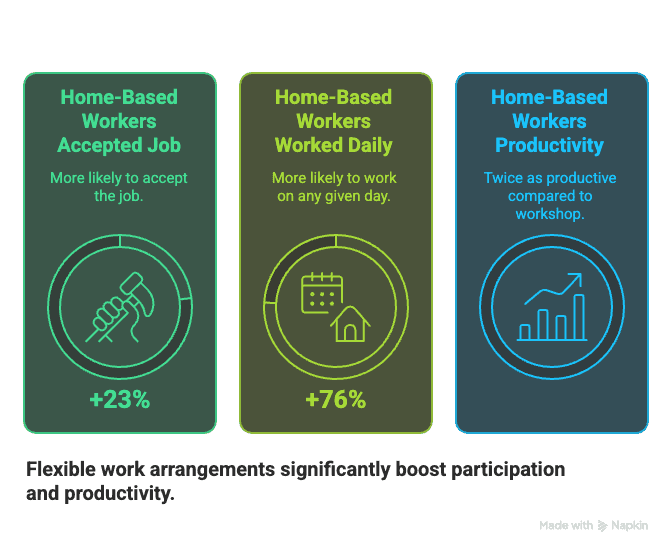
Flexibility as a Productivity Driver : Rigid job structures contribute significantly to attrition, particularly for women balancing paid work and care responsibilities. In rural Rajasthan, we tested offering paid crochet work either at a nearby workshop or flexibly from home. Home-based workers were 23% more likely to accept the job, 76% more likely to work on any given day, and twice as productive. Participation and performance improved when the structure of the job reflected the structure of women’s lives.
Management Practices and Workplace Culture: In the garment sector, high turnover among women workers is often attributed to marriage or migration. Our findings suggest workplace conditions are a major driver. Through the STITCH programme, we trained factory supervisors in communication, empathy, and conflict resolution. Turnover fell by 15%, productivity increased by 5.8%, and worker pay rose by 35%. Separately, deploying INACHE, an anonymous multilingual grievance tool, resolved 95% of reported issues and was associated with a 22.5% reduction in absenteeism. Workplace culture is a key driving factor of retention.
Women's Participation Is a Condition for Growth
Budget 2026–27 takes meaningful steps toward building the infrastructure that women's workforce participation requires, safe housing, legal protections, enterprise pathways, and the beginnings of a formal care sector.
What our evidence makes clear is that policy infrastructure and workplace reality are two different things, and the distance between them is where women are still being lost. Rigid hours, hostile management, unsafe commutes, and financial tools that require confidence and autonomy to use, these are the constraints that determine whether the Budget's measures translate into actual participation.
We believe that when workplaces actively address these constraints, the benefits extend well beyond the individual worker. Women who participate fully in formal employment invest disproportionately in their families' health and education, building the human capital that sustains long-term growth. Firms that invest in the conditions for women's participation gain access to a more stable, productive, and committed workforce. And at the national level, closing the gender gap in labour force participation sits alongside India's economic ambitions.
Article Cover Photo by Ian Taylor.
related content
blog

why high turnover persists in retail — and why it matters now
Team GBL
6 mins
blog

budget 2026–27 and the next frontier of financial security
Parridhi A
6 mins
blog
making sexual and reproductive health training work in factories: lessons from the shopfloor
Murchana Nath
7 mins