all case studies
evaluating empowerment initiatives for rural girls
evaluating empowerment initiatives for rural girls

Can skill interventions for adolescent girls support their transitions to more autonomous adulthoods?
challenges and opportunities
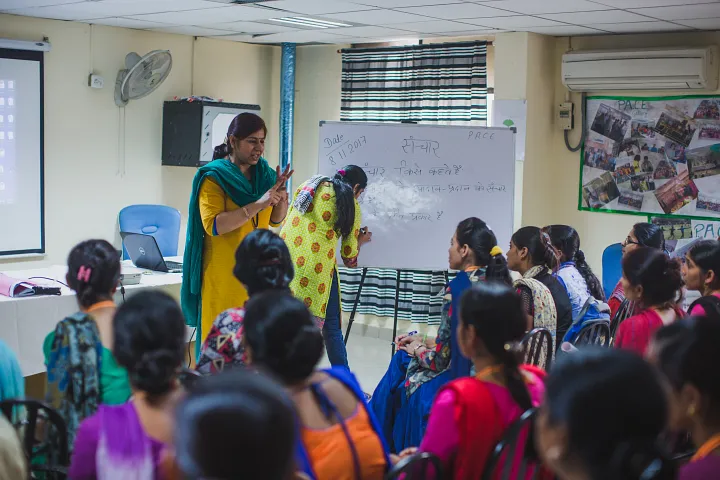
Adolescent girls are an especially vulnerable section of the Indian population. They face multiple constraints across many dimensions of their life such as health, education, income, and social status. In the two northern Indian states of Chhattisgarh and Bihar, gaps persist in their knowledge about healthcare practices, access to higher education, financial management, and employment opportunities. We partnered with the Centre for Catalyzing Change (C3) which is implementing a two-year empowerment program called the Sakshamaa initiative in the region. The objective is to train at least 1,000 adolescent girls in the age cohort of 15-19 years in rural areas and strengthen their capabilities to transition into adulthood.
research question
Can an integrated training that extends its scope to digital, financial, and life skills, improve the autonomy of adolescent girls? Can such an intervention impact community beliefs about the position girls hold in them?
research design
The program will span across six critical areas: education, economic empowerment, digital literacy, bodily integrity and holistic health, psychosocial well-being, voice and agency. Sakshamaa seeks to simultaneously engage with participants’ families and local communities to shift ingrained societal beliefs on gender. We joined the initiative as an evaluation partner to understand its comprehensive impact on the participating girls’ social, economic, and welfare outcomes. We will compare the area outcomes of participating girls in villages where Sakshamaa was conducted to villages that did not receive the intervention.
measuring outcomes
Participants’ educational attainment
Participants’ labor force participation
Marital and fertility preferences of participants
Participants’ knowledge of sexual and reproductive health and hygiene practices
Community attitudes towards gender-bias, girls’ agency, and decision making
Girls and parental interactions
Participants’ digital and financial literacy