all case studies
decarbonization in textiles & construction (dtc): a worker-centric approach
A worker-centric climate transition can make textiles and construction more resilient, inclusive, and sustainable.

what does decarbonization mean for the millions of workers who keep India’s factories and worksites running?
India’s textile and construction sectors are central to the country’s climate commitments. But current decarbonization strategies don’t always account for the realities of workers, many of whom are in informal, low-paid positions with few safeguards in place. Our systems thinking study shows that by putting workers at the heart of climate action, decarbonization can reduce emissions while improving job quality, resilience, and equity across supply chains.
scope
Our study looked specifically at India’s textile and construction sectors. Both are labour-heavy, largely informal, and highly exposed to climate risks yet current approaches to decarbonization focus mainly on technology, efficiency, and compliance. We examined how these transitions play out in such contexts, where realities like heat stress, inadequate worksite safeguards, and water scarcity often intersect with gender inequities. The study engaged stakeholders from businesses and ESG consultants to planners, NGOs, and technology providers to identify both the constraints and the opportunities for worker-centric pathways.
approach
We looked at decarbonization through both a worker and systems lens.
Stakeholder consultations: over 20 interviews with businesses, ESG consultants, NGOs, technology providers, architects, and planners.
Worker-centric framing: We brought into the conversation the realities of heat stress, water scarcity, unsafe worksites, and gender inequities that shape how decarbonization actually plays out on the ground.
methodology
To map decarbonization pathways in India’s textile and construction sectors, we combined qualitative research with systems thinking tools. Our approach was designed to go beyond emissions and technology, centering worker experiences and the social dimensions of climate transitions.
We conducted a literature review of national and international research to understand existing debates, policies, and gaps. Using journey maps, we traced the lifecycle of key materials such as steel, cement, and brick in construction, and cotton and polyester in textiles to understand carbon emissions and the interconnected challenges that keep industries locked into high-emission, resource-intensive practices.
We also applied the PESTEL framework (political, economic, social, technological, environmental, legal) to analyze our findings, highlighting the interplay between industrial policy, market structures, and labor conditions. Finally, we created systems and actor maps to visualize the supply chains of both sectors, showing how entrenched feedback loops lock industries into high-emission, resource-intensive practices and where leverage points for change might lie.
outcomes (early insights)
Construction
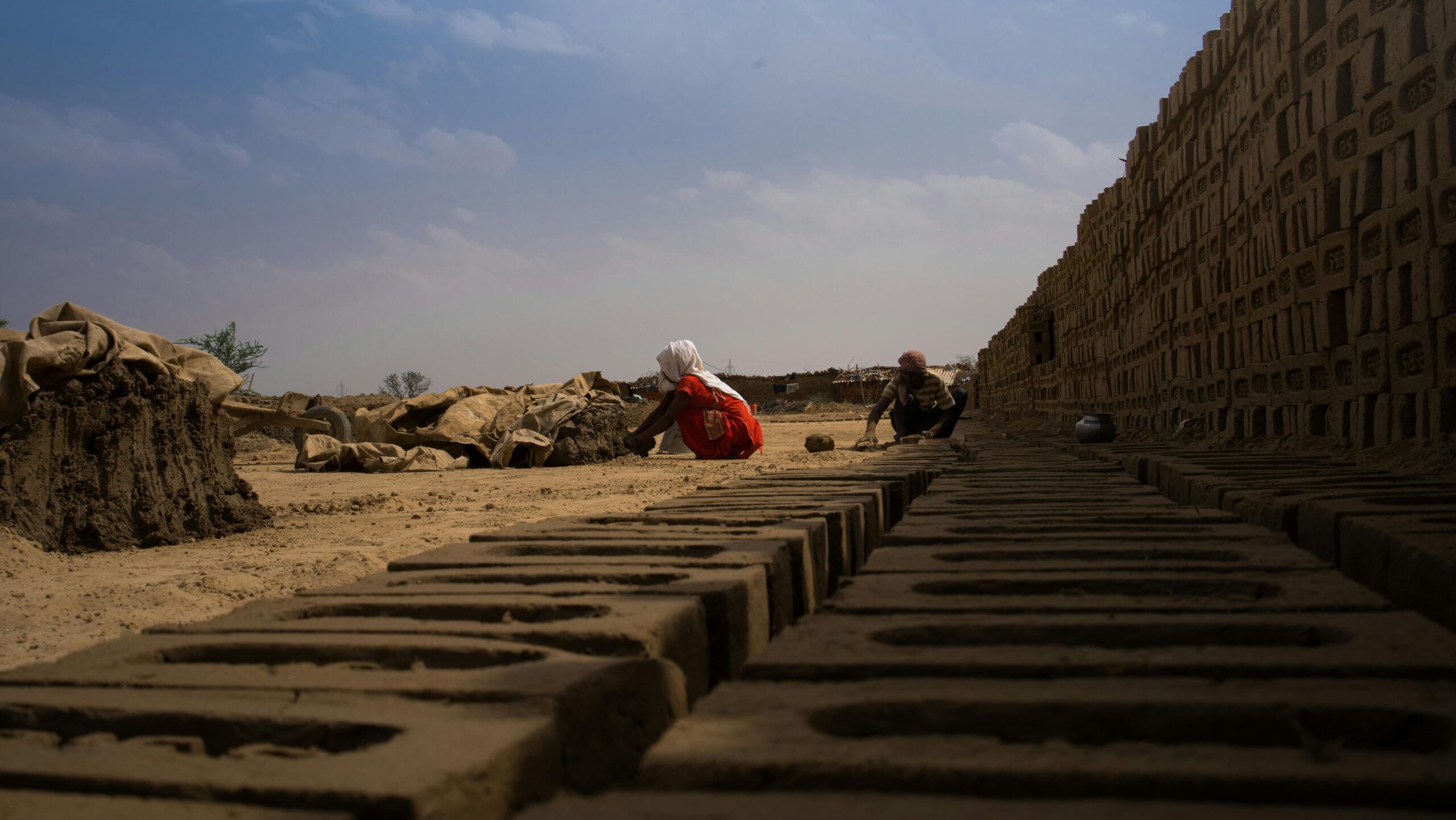
Progress has been made on operational emissions, but embodied emissions (from materials like steel and cement) are barely addressed because of fragmented supply chains and no clear benchmarks.
“Green materials” such as low-carbon cement, recycled steel, or alternative bricks exist but niche adoption is held back by high costs, low demand, and weak certification.
Many MSMEs view sustainability as a cost rather than an investment, so uptake will stay low unless financing and proof of business value are provided.
Without proactive reskilling efforts and better job security, it could deepen worker challenges rather than create fair opportunities in the transition.
Gender inequity exists as women are often concentrated in informal, low-paid roles, with limited access to pathways into green jobs.
Textiles
India has no mandatory decarbonization policy; most government schemes are voluntary.
Global brands set ambitious sustainability targets, but MSMEs are left to carry the compliance burden with very little support.
Long and fragmented supply chains add to emissions and complexity.
New green fuels such as biomass remain intermediate solutions, as they can impact air quality and worker health through dust emissions and must be sourced sustainably to avoid environmental trade-offs.
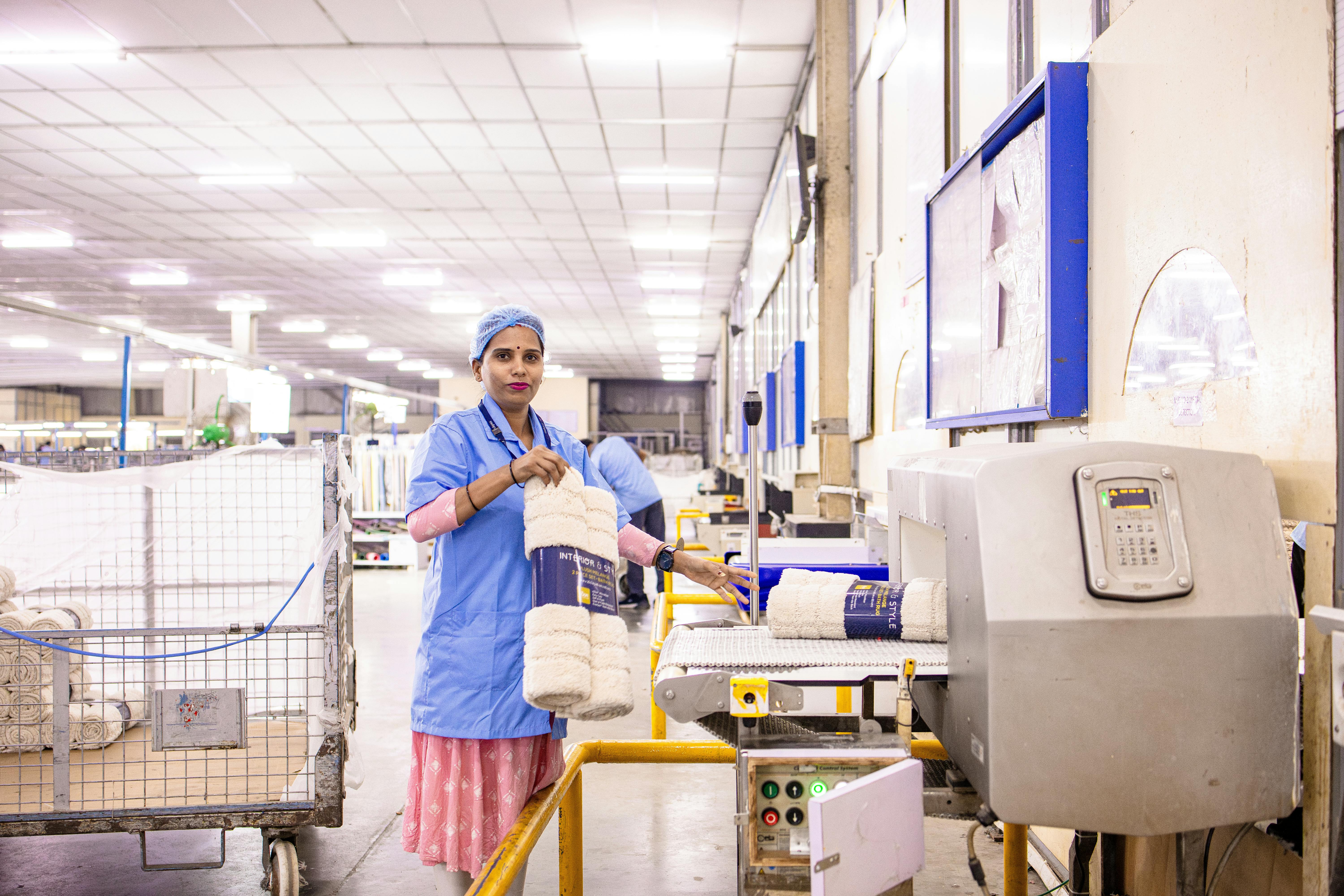
Climate change adds pressure: water scarcity, unsafe working conditions, and extreme heat affect workers daily.
Cross-cutting
Workers are largely excluded from decision-making, even though they’re the ones most affected.
Climate stress deepens social inequalities, sometimes even fuelling domestic violence.
potential
Decarbonization in India’s textile and construction sectors cannot be only about carbon. To work, it has to account for people's realities. That means making emissions data easier to track and linking sector policies with stronger labour protections. MSMEs, which form the backbone of both sectors, will need incentives that allow them to comply without cutting corners for workers.
It also means expanding skilling and reskilling opportunities especially for women and informal workers, so, the transition doesn’t leave them behind. New linkages are possible too, like turning textile waste into construction materials, or drawing on traditional practices such as bamboo in building and natural dyes in textiles to ground sustainability locally.
And crucially, workers themselves need a seat at the table. When decision-making and grievance systems include their voices, the transition gains trust, durability, and business value. A worker-centred pathway can protect livelihoods and make industries more resilient, ensuring India’s climate transition is not only green, but also fair and inclusive.
We’re now building on this work through direct firm engagement working with businesses, industry bodies, and ecosystem partners to test practical models for worker-centred decarbonization. These engagements aim to translate our systems research into actionable pilots that strengthen both environmental performance and job quality.