all articles
making sexual and reproductive health training work in factories: lessons from the shopfloor
Murchana Nath
GBL and Project Baala piloted a 16-week sexual and reproductive health training programme in a garment factory. Here is what the data showed, and what it took to make it work.
For millions of women working in India, access to reliable sexual and reproductive health (SRH) information remains limited well into adulthood. Challenges such as poor menstrual hygiene management—particularly among less-educated women, low uptake of modern contraceptives, and limited autonomy in reproductive decision-making remain widespread (IIPS and ICF 2021; Singh et al., 2018), with NFHS-5 (2019–21) showing that only 78% of women aged 15–24 use hygienic menstrual methods and only 56% of married couples use modern contraceptive methods. Social stigma, early school dropout, restricted mobility, and weak public health outreach means that many women enter the workforce with little formal knowledge about menstruation, contraception, pregnancy, or their rights related to sexual safety and health. These gaps have far-reaching consequences, affecting women’s health, autonomy, and long-term wellbeing, as well as their ability to participate fully and productively in paid work.
why factories are a critical entry point for SRH interventions
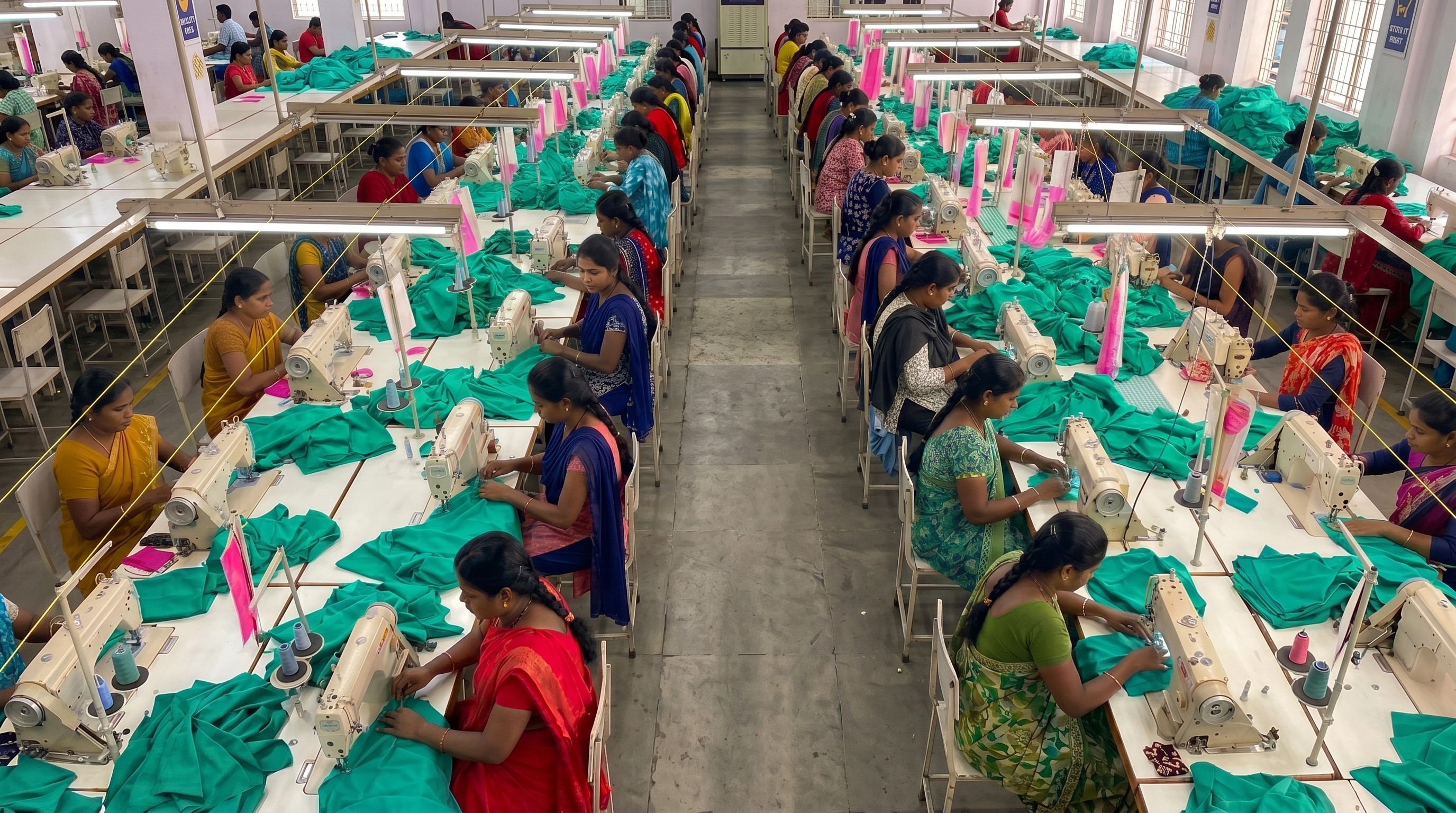
Workplaces that employ large numbers of low-income women offer an opportunity to address this challenge. India’s textile and garment sector employs over 45 million workers and is one of the country’s largest employers of women from rural and marginalised communities. For many workers, factories are among the few institutional spaces they access regularly. Workplaces allow repeated engagement with the same group of women over time, which is important from an implementation perspective. Delivering a SRH program in a workplace setting can reduce the cost per beneficiary, regular schedules make structured training feasible, and alignment with production systems allows programmes to run without disrupting operations. There is also growing evidence that better worker health can improve attendance, retention, and productivity, strengthening the case for employer and supply-chain engagement (Czura et al, 2019; Hossain et al., 2017).
testing a low-cost, workplace-based SRH training model
Against this backdrop, Good Business Lab partnered with Project Baala, a specialist SRH organisation, to design and pilot a workplace-based SRH training programme for women in a garment factory. The objective was to assess whether such training can improve knowledge and attitudes related to SRH, as well as to understand what it takes to operationalise the same within active factory settings. The pilot covered 117 women workers, with 66 receiving the training.The curriculum, informed by an initial scoping exercise, covered key themes including general health and health-seeking behaviour, menstruation and pregnancy, sex, contraception and abortion, antenatal and postnatal care, and gender-based violence and available support systems. Delivered over 16 weeks, the programme prioritised sustained engagement and safe spaces, recognising that trust is essential when discussing highly stigmatised topics.
what did it take to make the training work on the ground
1. deep engagement with factory management
Operationalising the training required careful navigation of factory realities. The starting point was building a strong working relationship with factory management. Early engagement with senior staff helped establish the purpose of the training, its relevance for workers’ wellbeing, and its compatibility with production needs. Regular communication and coordination with the factory HR and the production managers on floor-level demands, buyer visits, and shifting production targets allowed the programme to adapt to changing field realities.
2. thoughtful training design - creating safe spaces
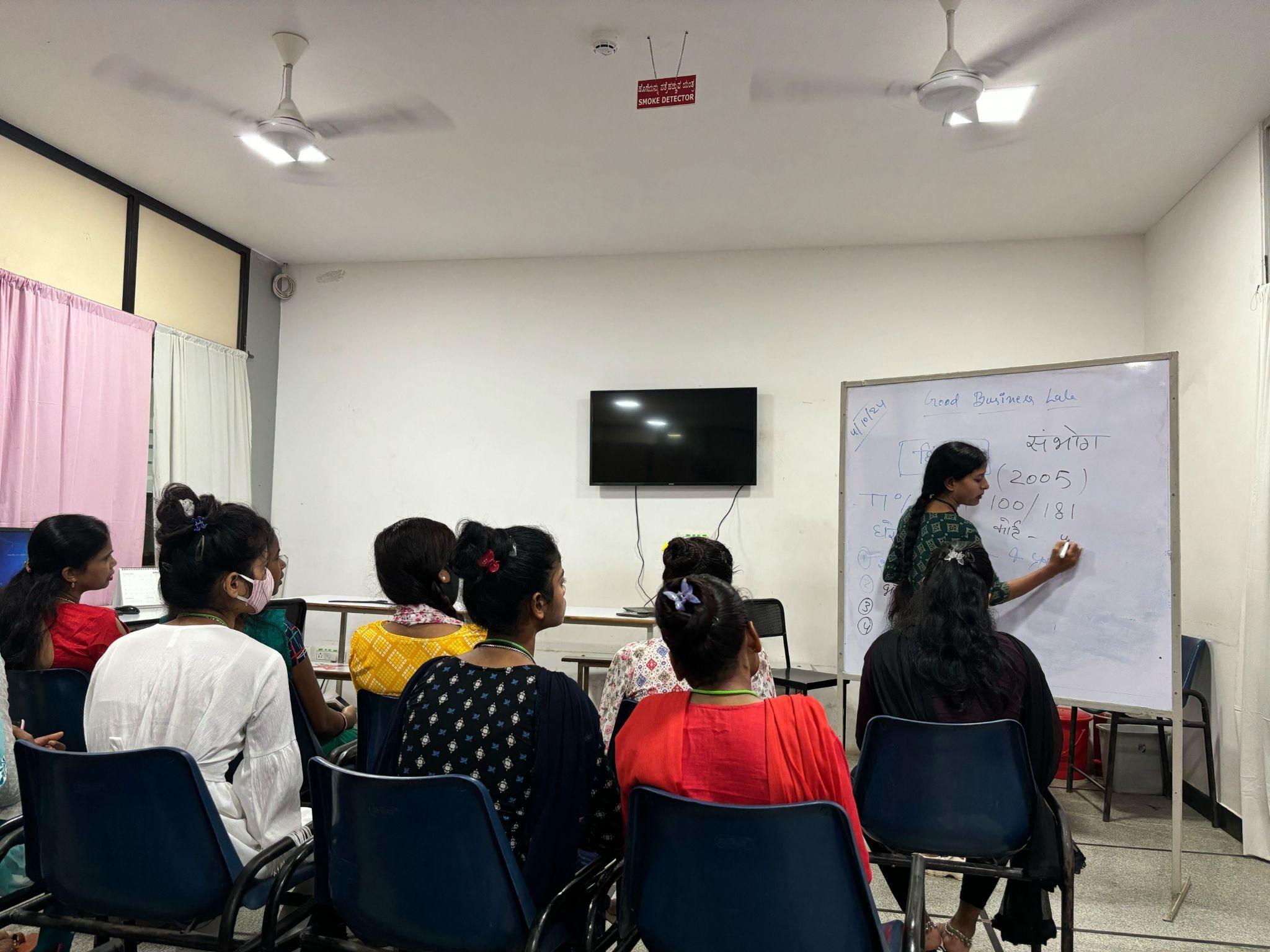
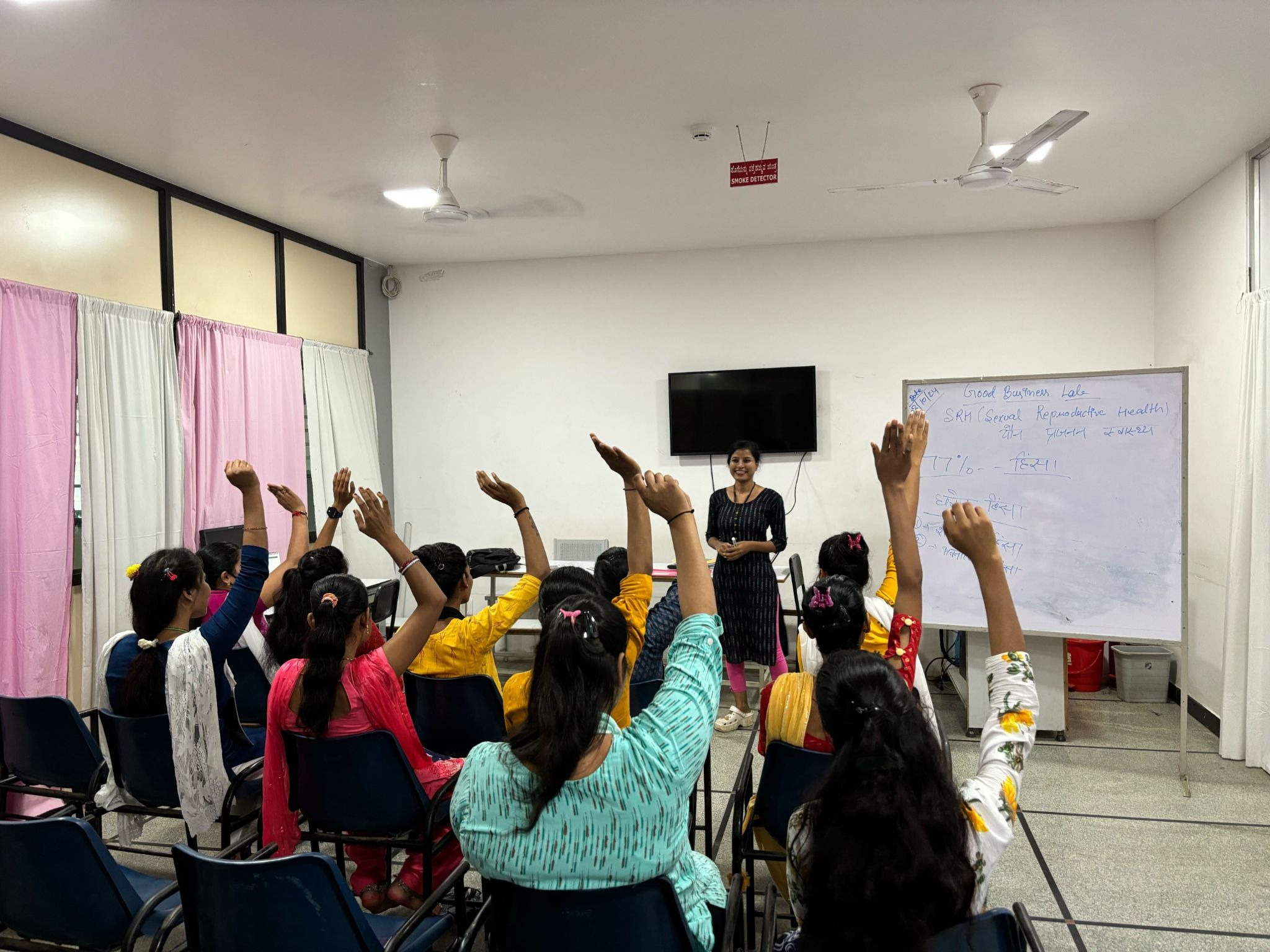
The training’s design was central to its effectiveness. Sessions were conducted in small groups of 10-15 women in private meeting rooms inside the factory premises, creating a safe environment. Each session lasted approximately 45 to 60 minutes and was held weekly over a 16-week period for one group. By pacing the training over a longer period, the programme helped women build trust with the trainer and each other, making them more comfortable asking questions, challenging myths, and sharing personal experiences around menstruation, contraception, and healthcare.
3. strong delivery and facilitation
Quality of delivery was equally important.
A dedicated master trainer, trained by the SRH expert organisation, led all sessions. Before rollout, the trainer conducted pilot sessions and incorporated feedback from the expert and research teams to refine both content and facilitation. During implementation, initial days of each session were closely monitored to assess engagement, participation, and clarity of messaging, allowing the team to make small refinements where needed. The trainer played a central role in building rapport and creating a safe, comfortable space for discussing sensitive SRH topics.
Sessions used diverse visual aids - including videos, images, PowerPoint presentations, and demonstrations with actual products such as sanitary pads and pregnancy kits - to strengthen comprehension and engagement, while also creating lasting “photo memories” that reinforced recall. Each session began with an icebreaker and a recap of previous content, while questions that could not be answered immediately were documented and addressed later in consultation with SRH experts. An independent observer attended sessions to document participation, questions, and interactions, supporting ongoing learning and programme monitoring. An anecdote shared by one participant towards the end of the program:
"I had learned a lot from the trainer. I had shared the video on menstruation in the WhatsApp group with my roommate, explaining to her that this is how periods occur. My roommate said she had never known this before."
4. working around factory constraints
Factory constraints required careful logistical planning. Workers for each training group were selected across different production floors to avoid concentrated absences from any single production section, allowing production to continue smoothly while workers participated in the training. Sessions were scheduled in the morning at 9 am, before peak production hours, to limit operational disruptions. Management actively supported the programme by informing workers about session timings and encouraging timely attendance. Despite this support, field timelines remained unpredictable. Sessions were occasionally delayed or rescheduled due to production pressures, but these challenges were managed through flexibility and continuous engagement with factory staff.
To further strengthen sustainability, factory management could be trained on the curriculum to help ensure quality delivery. In addition, factory welfare officers could potentially be trained to serve as facilitators, which may help reduce costs further. With these elements in place, the model offers a practical and scalable pathway for integrating SRH training into existing factory systems while sustaining improvements in knowledge and attitudes—without disrupting production.
what changed for workers
The pilot demonstrated the potential of workplace-based SRH training. Attendance remained consistently high across the 16-week programme, with 92% average participation and strong engagement during sessions.
Participants openly discussed cultural norms, personal concerns, and experiences that are often difficult to speak about elsewhere, underscoring the importance of creating safe and structured spaces within workplaces. By the end of the programme, women who received the training showed significant improvements in SRH-related knowledge and attitudes compared to those who did not. Gains were especially strong in menstrual health, while notable improvements were also seen in understanding pregnancy, contraception, sexually transmitted diseases, and support systems related to sexual harassment.
Factory management also expressed interest in scaling the programme further to the entire factory, observing that participants were highly engaged and often attended sessions voluntarily without needing reminders.
References
Acharya, R., Subramanian, S. V., Singh, A., Prakash, R., & Misra, A. (2023). Risk factors of metabolic syndrome among women in India: Evidence from a nationally representative cross-sectional survey. PLOS ONE, 18(8), e0282468. [https://doi.org/10.1371/journal.pone.0282468]
Appollis, T. M., Mathews, C., Lombard, C., & Jonas, K. (2024). School dropout, absenteeism and coverage of sexual and reproductive health services in South Africa: Are those most at risk reached? AIDS and Behavior, 28(10), 3525–3542. [https://pubmed.ncbi.nlm.nih.gov/39028386/]
Czura, K., Menzel, A., & Miotto, M. (2024). Improved menstrual health and the workplace: An RCT with female Bangladeshi garment workers. Journal of Development Economics, 166. [https://www.sciencedirect.com/science/article/abs/pii/S030438782300130X]
Hossain, M. I., Reichenbach, L., Shohag, A., & Rob, U. (2017). Evaluation of the Effectiveness of the HERhealth Model for Improving Sexual and Reproductive Health and Rights Knowledge and Access of Female Garment Factory Workers in Bangladesh. [https://www.researchgate.net/publication/336846672_Evaluation_of_the_Effectiveness_of_the_HERhealth_Model_for_Improving_Sexual_and_Reproductive_Health_and_Rights_Knowledge_and_Access_of_Female_Garment_Factory_Workers_in_Bangladesh]
Indian National Bar Association. (2017). Garima: Sexual Harassment at Workplace. [https://www.indianbarassociation.org/wp-content/uploads/2017/07/Garima-1INBAs-Book.pdf]
International Institute for Population Sciences (IIPS) & ICF. (2021). National Family Health Survey (NFHS-5), 2019–21: India (Final Report). The DHS Program. [https://dhsprogram.com/pubs/pdf/FR375/FR375.pdf]
Press Information Bureau (PIB) Delhi. (2025). Threads of Progress: How Make in India is Shaping the Future of Textiles and Apparel Industry. [https://www.pib.gov.in/PressReleasePage.aspx?PRID=2117470#:~:text=Overview%20of%20India%27s%20Textile%20Industry,MSME)%20clusters%20in%20the%20country.]
Singh, S., Shekhar, C., Acharya, R., Moore, A. M., Stillman, M., Pradhan, M. R., Sahoo, H., Alagarajan, M., Hussain, R., Sundaram, A., Vlassoff, M., & Browne, A. (2018). The incidence of abortion and unintended pregnancy in India, 2015. The Lancet Global Health, 6(1), e111–e120. [https://doi.org/10.1016/S2214-109X(17)30453-9]
related content
blog

why do happy employees in India's retail sector still leave?
Team GBL
9 mins
blog

why high turnover persists in retail — and why it matters now
Team GBL
6 mins
blog

budget 2026–27 and the next frontier of financial security
Parridhi A
6 mins