


Date: Monday, June 30, 2025
Venue: Ford Foundation Center for Social Justice
320 E 43rd St, New York, NY 10017
Opening Note
The Good Business Forum 2025 opened with a single, urgent question: How do we redesign work to be more inclusive, equitable, and sustainable, especially for women in frontline and labor-intensive roles?
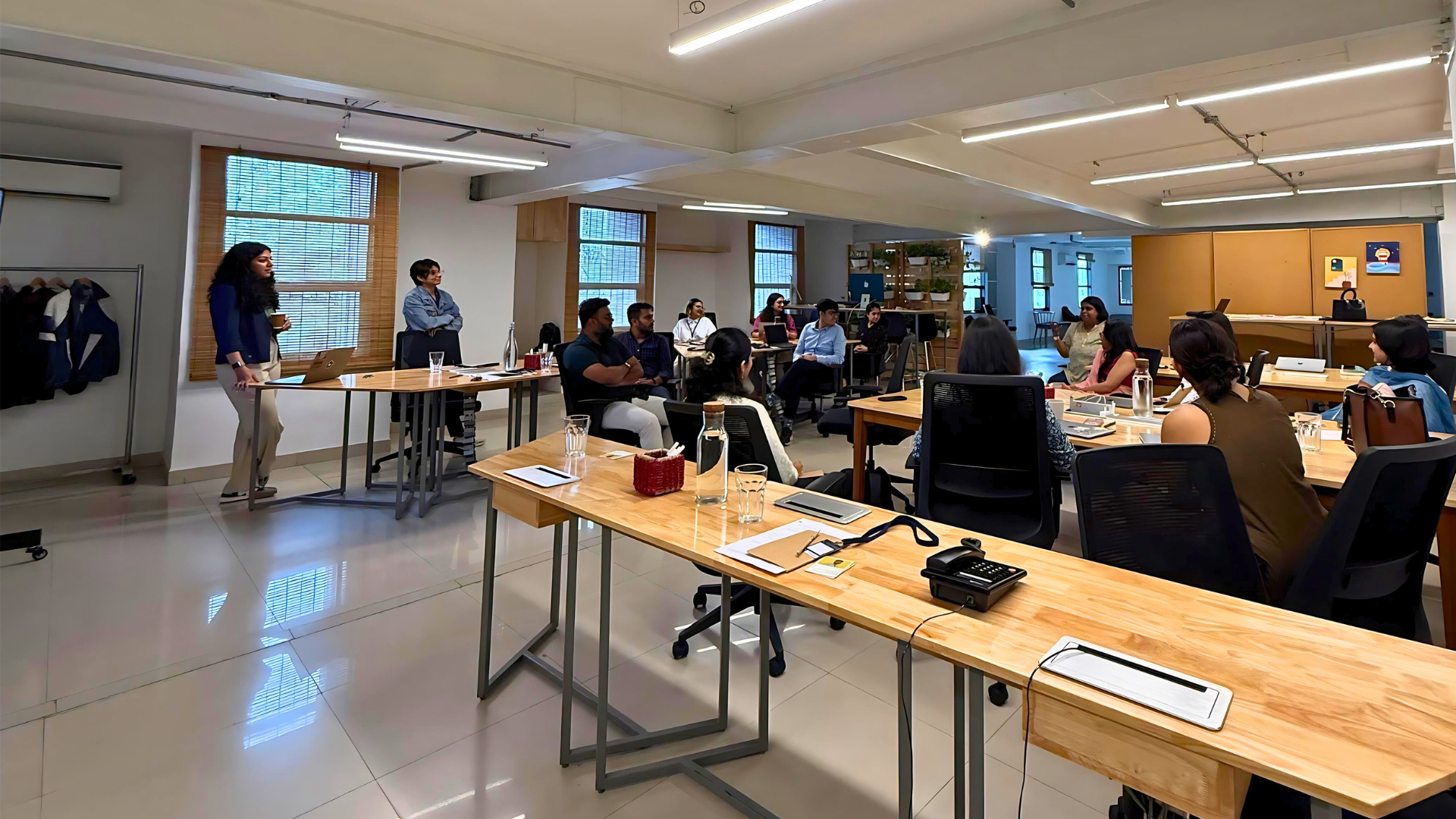
Welcoming over 70 leaders from the private sector, philanthropy, civil society organisations, academia, and government, the Forum was hosted by Good Business Lab (GBL), co-hosted by United Nations Foundation (UNF) and supported by Gates Foundation. To ensure candor and the privacy of participants, the forum was held under the Chatham House Rule.
From the first words of the opening address, one truth rang clear: “When private sector firms invest meaningfully in workers, both workers and firms thrive.”
Keynote contributions from senior government officials and policymakers framed the day with a set of urgent questions:
- What does “decent work” in global supply chains mean today? How can we look beyond paychecks to include dignity, predictability, and safety?
- How do we ensure fair, formal systems for often-overlooked categories of workers such as women, gig workers, and better support those returning after childbirth or caregiving?
- Why are women’s caregiving contributions still undervalued in society?
Childcare, housing, and community support were emphasized not as peripheral issues, but as central to economic participation and well-being. One of the speakers noted: “Accessible childcare is not a nice-to-have; It’s an economic engine for cities,” and reminded us that the time for pledges is over. What matters now is how power, participation, and partnership are redistributed in the design of work, and who gets to shape that future.
The insights below capture the most resonant ideas, reflections, and provocations from the day’s rich discussions.
1. Better Work Is Better Business
“By helping women, you’re helping improve the work quality for all workers.” Across conversations, one conviction echoed: gender equity isn’t charity, it’s strategy.
Speakers shared data linking even modest advances in inclusion to outsized business impact:
- Just a 1% rise in gender diversity can boost sales revenue by up to 3%.
- Women in managerial roles are more likely to support team well-being, redistribute workloads, and build trust-based workplace cultures. Facilities with higher representation of women in leadership demonstrate stronger ESG performance.
- Gender-responsive HR systems (e.g., onboarding, appraisal, promotion) are foundational, and tools like Social & Labor Convergence Program (SLCP) and the Higg Brand & Retail Module (Higg BRM) are helping quantify gaps.
Participants reflected on how foundational workplace features like upskilling, health benefits, and access to automation can either close or widen gender gaps.
The consensus: businesses thrive when these systems are embedded into core operations, not treated as optional add-ons.
Investing in women’s health, access to childcare, safe transportation, and career mobility was named repeatedly as a critical dimension of business resilience and long-term success.
2. From Rhetoric to Systems Change
While rhetoric around gender and equity has grown louder, participants cautioned that impact has not kept pace. The call: move beyond slogans to systemic redesign.
Participants surfaced key drivers and opportunities:
- Gender provisions are now embedded in trade agreements and ESG frameworks, raising the stakes for companies.
- Social compliance tools like pay gap reporting and living wage standards are creating accountability.
- Regulatory shifts, once seen as burdens, are now understood as mechanisms for capacity-building and stability.
Still, the need for deeper transformation was clear. The question is no longer whether companies should act, but how they can:
- Collaborate across departments and sectors to pool resources and knowledge.
- Empower HR teams and supplier networks to champion inclusion.
- Rely on feedback loops from workers and communities to inform priorities.
The challenge: Are we resourcing the hard, slow work of change? Or just checking boxes?
3. Workers Know What Works
| “My dream work environment would make me feel indispensable and valued.”
A key moment in the forum brought frontline workers’ voices to the fore. Local workers from diverse sectors spoke powerfully about what “decent work” means in their daily lives.
Their stories offered sharp, actionable insights:
- Safety must include mental wellbeing, freedom from retaliation, and autonomy over shifts, not just physical protection.
- Transparency around pay, hours, and expectations is key to dignity and trust.
- Workers must be co-designers of policies, from app features to grievance redressal, so systems reflect lived realities.
Workers asked to be seen not as beneficiaries but as co-creators. Their vision for good work was grounded, specific, and hopeful: to feel valued, to be heard, and to have the means to thrive.
4. Resilience Is a Team Sport
The forum underscored how tightly intertwined work, housing, health, care, and economic mobility truly are. Fragmented responses don’t work. Resilience requires coordinated design and includes:
- Public programs like housing and childcare unlock economic opportunity, especially for women.
- Cross-sector partnerships, especially public-private ones.
- Investors and funders moving past perfectionism in impact metrics. Iteration, inclusion, and responsiveness matter more.
- Climate policies being just and worker-informed
- Worker-designed tools like chatbots, simplifying contract language, showing how tech can center accessibility and inclusion.
- Data systems evolving to reflect lived experiences. Programs that account for gender norms (e.g., caregiving responsibilities) see significantly higher retention in training.
Legislation, on its own, isn’t enough. Peer learning, technical support, and experimentation are what convert policy into practice.
5. Rethinking Philanthropy
Philanthropy can be a powerful lever for systems change, but only if it rethinks how power and capital are structured. Forum insights urged:
- Shift control: Let grassroots leaders and workers shape funding priorities.
- Cover the hard costs: infrastructure, coordination, experimentation.
- Use fiscal sponsors and intermediaries to deploy capital quickly and equitably.
- Align timelines: Long-term systems change needs long-term capital. Fiscal intermediaries and anchor funders can help bridge timing gaps.
The central thought: Are we funding what feels good, or what truly transforms?
Many NGOs have started to explore alternate revenue models to move from dependency to durability, especially in an era of funder fragmentation and shifting priorities.
6. Visibility ≠ Value
Despite their critical contributions, women’s labor remains undervalued, whether in factories, homes, or informal jobs.
Several patterns stood out:
- Women reinvest more in families and communities, yet remain excluded from leadership.
- The “motherhood penalty” continues to shape career trajectories, with most women entering or re-entering the workforce after 30.
- Disability, caregiving, and informal work are too often ignored in workforce policy and design.
Participants pushed for a reframing of economic value. What counts as “productive” work? Who defines it? And how do we ensure visibility translates into fair pay, protection, and progression?
Closing Reflections: Move From Dialogue to Design
“Decent work should lead to a decent life.”
The Forum concluded with a series of unifying insights and challenges:
- Trust is the foundation of meaningful workplace transformation.
- Leader organizations raise the bar, offering blueprints for others to follow.
- We must shift from shaming to showing, and from broad values to concrete values: designing programs that not only reflect our ideals, but also deliver measurable outcomes for workers and businesses alike.
- Evidence must walk alongside experimentation. The Forum emphasized that change doesn’t emerge; it is built through iterative, on-the-ground efforts that are rigorously tested and adapted. From piloting AI-powered contract explainers to community-rooted training models for women re-entering the workforce, the forum showcased real-world interventions that marry research with responsiveness. Institutions like GBL are leaning into this intersection, designing programs with the worker at the center, while generating the data and insight needed to build legitimacy and scale. In this context, “impact” isn’t just a metric; it’s a muscle that is built, tested, and strengthened over time.
Participants left ready to challenge silos, rewire systems, and center dignity in the future of work.
What Comes Next?
- Act: Make inclusion a design principle, not an afterthought.
- Invest: Channel long-term funding towards research, innovation, worker voice, and system infrastructure.
- Collaborate: With GBL in co-creating, testing, and scaling new models of worker wellbeing. Contact us at info@goodbusinesslab.org.
This summary was compiled & developed under Chatham House Rule. Insights are shared without attribution to honor the trust and candor of our speakers and participants.
-
 budget 2026–27 makes the case for human capital
 -
 how better mobility unlocks women's access to work
 -
 rethinking the platform economy: insights from GBL’s first Unconference
 -
 mental health & migration: how fostering friendships between migrant workers improves mental health and productivity
 -
 the hidden cost of financial stress
